

You can obtain a home-based business license in Dubai by selecting the most appropriate license type—such as an E‑commerce permit on the mainland or a home-based free zone setup—and then following a structured, compliant process. Clearly define your business model (online store, consultancy, or digital services), match it to an approved business activity, and reserve a trade name that follows UAE naming rules while aligning with your brand and digital presence. After that, prepare all required documents, including passport, visa, Emirates ID, tenancy contract, and any necessary NOCs from your landlord or visa sponsor, and submit your application through the relevant online government or free zone portal, ensuring all details are accurate to avoid delays.
Once your application is approved, pay the license fees to receive your trade license electronically, which allows you to legally market your services, issue invoices, and, where applicable, open a business bank account. To stay compliant and protect your reputation, renew your license annually, maintain proper financial records, and keep business and personal finances separate as your home-based business grows. To make this process smoother and more efficient, Avantex can serve as your dedicated business setup partner, helping you choose the ideal license structure, handle documentation and submissions, coordinate with authorities, and guide you on banking and ongoing compliance—so you can focus on building and scaling your Dubai home-based business with confidence.

WHAT IS A HOME-BASED BUSINESS LICENSE IN DUBAI?
A home-based business license lets you legally run a small or online business from your residence rather than renting an office in Dubai. It’s designed for low-overhead activities such as e-commerce, consulting, freelancing, design, and digital services, and it allows you to invoice clients, open a business bank account, and advertise your services legally.
There are two main routes: a mainland license (like E‑Trader or similar permits through the Department of Economy and Tourism) and free zone licenses that allow 100% remote, office‑free setups. Your choice affects costs, visa options, and where you can legally operate and sign contracts.
MAIN LICENSE OPTIONS (DUBAI RESIDENTS)
E‑Trader / Home Business Permit (Mainland Dubai): This license, issued by the Dubai economic authority, allows residents to sell products or services online or from home without a physical office, especially for small, solo businesses. It is typically aimed at individuals trading via social media, websites, or online marketplaces, and is popular for content creators, designers, and small e‑commerce brands.
Intelaq (for Emirati nationals): Intelaq is a home-based business license exclusively for UAE nationals in Dubai, issued through Dubai SME, allowing them to run certain professional and commercial activities from home. The business must be owned by an individual, Dubai- or GCC‑resident national, and the license holder can employ up to three staff members.
Free zone home-based setup (e.g., Meydan Free Zone): Several free zones (for example, Meydan Free Zone) let you set up a company with no office requirement and operate from your home, while still enjoying free‑zone benefits such as 100% foreign ownership and simplified setup. You can choose from a large list of activities (often 1,000+), apply fully online, and sometimes receive a license within an hour under fast-track services.
MAINLAND VS FREE ZONE (HOME-BASED) – KEY DIFFERENCES
| Aspect | Mainland home-based (e.g., E‑Trader) | Free zone home-based (e.g., Meydan FZ) |
| Ownership | Can be fully owned by expats or locals depending on license, sometimes tied to residency/Emirates ID. | 100% foreign ownership, company incorporated inside the free zone. |
| Office requirement | No dedicated office required; home address used for many permits. | No office required for many packages; fully remote setup allowed. |
| Scope of business | Ideal for small online, service, and home-based trades mainly in Dubai mainland. | Ideal for online and service businesses dealing locally and internationally (depending on activity and banking). |
| Authority | Dubai’s Department of Economy and Tourism (formerly DED) and related portals. | Individual free zone authority (e.g., Meydan Free Zone). |
| Bank accounts & visas | E‑Trader may have more limited visa options; banking depends on bank policies. | Many free zones support opening business bank accounts and offer visa quotas. |
STEP-BY-STEP: HOW TO GET A HOME-BASED BUSINESS LICENSE IN DUBAI
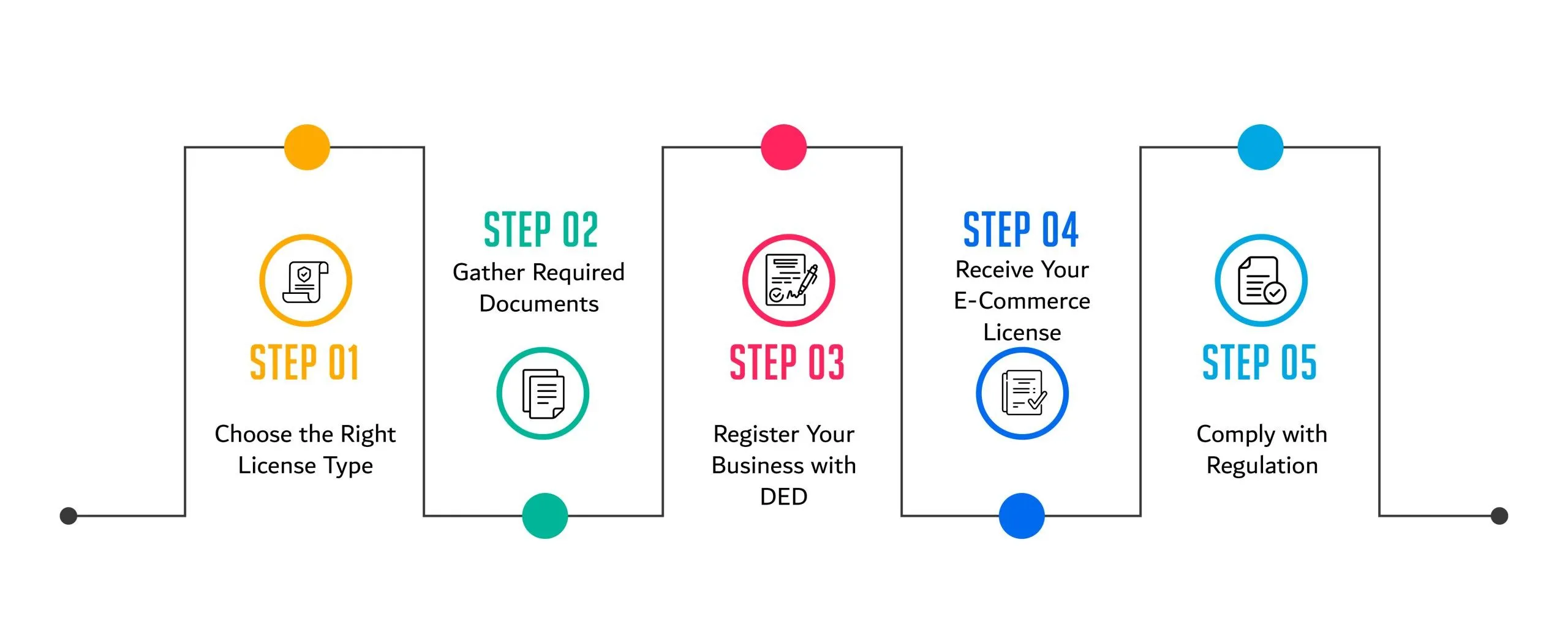
1. Clarify Your Business Idea and Activity
Before you touch any forms, be clear about what you will actually do from home. Examples of common home-friendly activities include:
- Online retail or e‑commerce (social media, website, marketplaces)
- Digital marketing, content creation, and social media management
- Graphic design, web design, and branding
- Consulting, coaching, and professional advisory services
- Freelance services (copywriting, translation, virtual assistance, tutoring)
Dubai authorities require you to pick an approved activity from an official list, and it must match what you will actually do. Activities involving food production, chemicals, industrial operations, or heavy storage usually need separate approvals and are often not allowed purely as home-based.
2. Choose Mainland vs Free Zone Route
- Choose mainland (E‑Trader / home business permit) if:
- You mainly sell via social media or online from Dubai.
- You want a simple, individual license without a full company structure.
- Your clients are mostly within Dubai and the wider UAE.
- Choose a free zone (e.g., Meydan Free Zone) if:
- You want a proper company structure with a trade license, incorporation documents, and sometimes visas.
- You want 100% foreign ownership and flexibility for international clients.
- You prefer a fast, fully online process with optional add‑ons like banking support.
3. Check Eligibility and Landlord/NOC Requirements
- Basic eligibility (varies by license):
- Valid passport.
- Valid UAE residence visa (for most expat options).
- Emirates ID for residents.
- Home address and landlord approval:
- You may need a tenancy contract or title deed showing your Dubai address.
- Some permits require a No Objection Certificate (NOC) from your landlord or building/community management confirming they allow home-based business activity.
4. Select and Reserve Your Trade Name
- The name must not include offensive terms or references to religions or political entities, and should not copy existing registered names.
- It should reflect the nature of your business, especially for professional or consultancy activities.
You can reserve the trade name via Dubai’s economic portals (for mainland) or through your chosen free zone’s online system. Once reserved, your name is held for a limited period while you complete the rest of the process.
5. Get Initial Approval (Where Required)
For many setups, especially mainland, you first obtain an initial approval confirming that the activity, name, and basic details are acceptable. This is not the final license, but it clears the path to submit your full application and pay fees.
- The Invest in Dubai or the economic department portal for mainland companies.
- The free zone’s website or digital platform for free zone companies.
6. Prepare and Submit Your Documents
- Passport copy of the owner (and partners if any).
- Valid UAE residence visa page (for residents).
- Emirates ID copy (if applicable).
- Passport-size photograph (digital).
- Tenancy contract or title deed as proof of address (for some home-based licenses).
- NOC from landlord or sponsor, where needed (for expats with employment visas).
- Completed application form, including activity, structure, and owner details.
You upload these documents to the relevant online portal or submit them via an authorized service center or a business setup consultancy.
7. Pay the License Fees
-
- Whether it is a mainland or a free zone license.
- The business activity and the number of activities selected.
- Any extra services (visa quota, corporate desk, banking assistance).
As a ballpark, some home-based packages advertise license fees starting from around the low to mid five figures in AED per year, though offers and structures change regularly. Payment is usually made online, at a service center, or through your chosen consultant.
8. Receive Your License and Start Operating
After payment, the authority issues your trade license, often within a few working days, though some free zones advertise issuance within about 60 minutes for fast-track packages.
- Legally promote and sell your products or services.
- Issue invoices in your business name.
- Apply to open a business bank account, subject to bank policies.
- Register on payment gateways and platforms that require trade licenses.
9. Ongoing Compliance and Renewal
- Renew on time to avoid fines and suspension.
- Keep your activity aligned with what is mentioned on your license; apply to amend it if your business model changes.
- Maintain basic records of income and expenses, especially if you are dealing with banks or may need to demonstrate substance and compliance later.
- If you grow to the point where you need staff or a physical office, you can upgrade to a larger mainland or free zone package.
COST OVERVIEW (MAINLAND VS FREE ZONE)
| Setup Type | Estimated Cost (Annual) | Key Inclusions |
| Mainland E-Trader | AED 6,000 – AED 10,000 | Trade license, name reservation, basic approvals |
| Free Zone | AED 5,500 – AED 12,000 | License, registration, virtual office (optional) |
PRACTICAL TIPS FOR A SUCCESSFUL HOME-BASED SETUP:
- Start Lean with One Clear Activity: Choose the single activity that best matches what you plan to do now, and expand later once your business has traction.
- Use a Business Setup Consultant if Unsure: A consultant can help you match your activity to the right license, manage your paperwork, and coordinate with authorities, which is especially helpful if you’re new to the UAE system.
- Separate Personal and Business Finances: Even if you begin with your personal account, aim to open a corporate or dedicated business account once your license is active to look more professional and keep your bookkeeping clean.
- Check Community Rules: Some residential buildings or communities have specific rules about signage, customer visits, or storage, so always confirm you’re allowed to operate quietly from your unit.
CONCLUSION:
Getting a home-based business license in Dubai is straightforward when you understand your activity, choose the right licensing route, and follow each step carefully from trade name reservation to final approval and renewal. By setting up correctly from day one, you protect your business legally, build trust with clients, and create a solid foundation for future growth.

If you prefer to avoid trial and error, partnering with a professional setup company can save you time, reduce paperwork stress, and help you choose the most cost-effective structure for your specific business model. This is where Avantex can be a valuable ally, guiding you through license selection, documentation, and approvals so you can focus on building and scaling your home-based business in Dubai with confidence.
FAQs (Frequently Asked Questions)
1. Can I operate any business from home in Dubai?
No. Home-based licenses are only approved for low-risk activities such as consulting, e-commerce, freelancing, and digital services. Industrial or high-risk activities are usually not permitted.
2. Do I need a tenancy contract for a home-based license?
Yes, in many cases. Authorities may require a tenancy contract or title deed as proof of residence, and some permits require a landlord NOC.
3. Can I hire staff with a home-based license?
Some licenses allow hiring staff, but this varies based on the license type and authority. Free zones may offer better visa and staff options.
4. How long does the process take?
The process typically takes 2–5 working days for mainland licenses and may be faster for free zone packages, sometimes within 24 hours under fast-track services.
5. Can I open a business bank account?
Yes, but bank approval depends on the bank’s policies and the license type. Free zone setups often have better banking support.
6. Do I need to renew the license annually?
Yes. All home-based licenses must be renewed annually to remain compliant and avoid fines.
