
How to Become an Entrepreneur in Dubai?

Dubai is a thriving hub for business and innovation, attracting entrepreneurs from around the world. With its strategic location, investor-friendly regulations, and world-class infrastructure, the city offers an ideal environment for starting and growing a business. For first-time entrepreneurs, navigating the legal requirements, licensing procedures, and business setup process can feel overwhelming — and that’s where Avantex, a trusted business setup consultant in Dubai, can make the journey smooth and efficient. This guide will walk you through the essential steps to become an entrepreneur in Dubai, while showing how professional support from Avantex can help turn your dream into reality.
1. Understand the Dubai Business Landscape
 Dubai has positioned itself as one of the most dynamic business environments globally. Its economy thrives on trade, tourism, real estate, logistics, and technology, making it a hotspot for entrepreneurs. Starting a business in Dubai offers several advantages:
- Tax benefits: No personal or corporate income tax in most sectors.
- Strategic location: Connects Asia, Europe, and Africa.
- Business-friendly regulations: Simplified licensing and streamlined processes.
- Access to investors and networks: Numerous startup incubators and accelerators.
Popular sectors for entrepreneurship in Dubai include technology, retail, e-commerce, tourism, and healthcare. Understanding the market landscape will help you identify the right business opportunity.
2. Choose the Right Business Structure
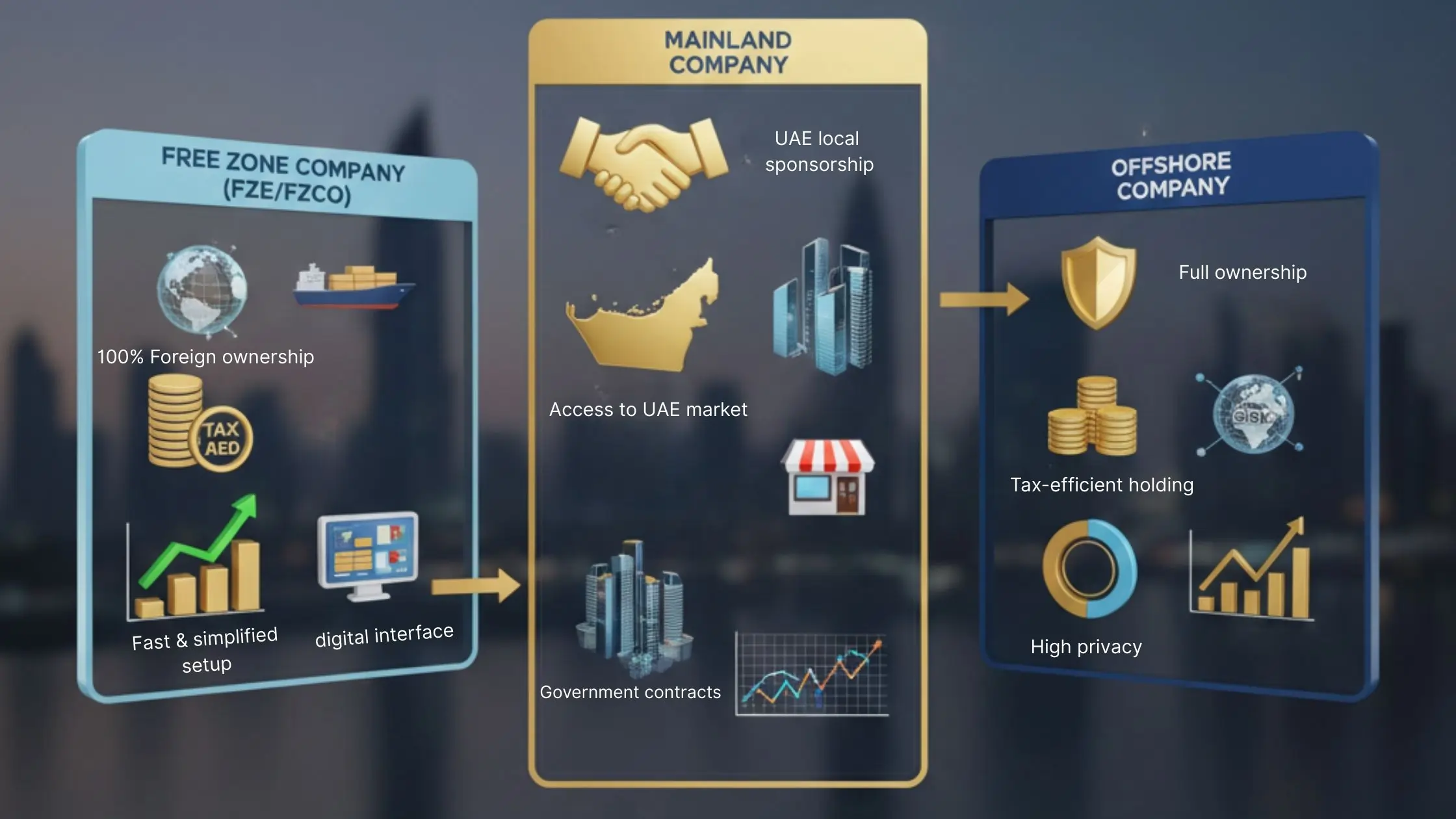
Choosing the right business structure is one of the most important decisions you’ll make as an entrepreneur in Dubai. The structure you select affects ownership rights, taxation, licensing, operational flexibility, and your ability to trade within Dubai and internationally. Understanding the differences between each option will help you make a decision aligned with your business goals. In Dubai, there are three primary types of business structures:
1. Free Zone Company (FZE/FZCO)
Free Zone Business Setup: Free Zone companies are designed to attract foreign investors and provide a simplified setup process. Key features include:
- 100% Foreign Ownership: Unlike mainland companies, you do not need a UAE national partner. This allows full control over business decisions and profits.
- Ideal for Export-Oriented Businesses: Free Zones are strategically located near ports and airports, making them perfect for import/export or international trading businesses.
- Tax Benefits: Most Free Zone companies are exempt from corporate and personal taxes for a certain period, often renewable.
- Simplified Operations: Free Zones provide streamlined licensing procedures, and many offer shared office facilities, digital services, and banking support.
Best for: Entrepreneurs who plan to operate internationally, require minimal local trading, or want full ownership and operational control.
2. Mainland Company
Mainland Business Setup: Mainland companies allow you to operate directly within Dubai and the rest of the UAE. Key characteristics include:
- Local Sponsorship Requirement: Most Mainland businesses require a UAE national sponsor or service agent who holds 51% of the company shares. However, recent reforms in certain sectors allow 100% foreign ownership.
- Wider Trading Scope: Unlike Free Zone companies, Mainland businesses can trade freely across Dubai and the UAE without restrictions.
- Flexibility in Operations: Mainland companies can provide services to the local market, bid for government contracts, and open branches anywhere in the UAE.
Best for: Entrepreneurs who want full access to the UAE market, intend to work with local clients, or plan to bid for government projects.

3. Offshore Company
Offshore Business Setup: Offshore companies are primarily used for international business operations and asset management. Key points include:
- Ownership and Privacy: Shareholders can retain full ownership with high levels of privacy and minimal disclosure requirements.
- Tax Benefits: Offshore structures often enjoy tax exemptions depending on jurisdiction, making them suitable for holding companies, investments, or intellectual property management.
- Limitations: Offshore companies cannot trade directly within the UAE market. They are mainly used for international operations, investments, or as holding companies.
Best for: Entrepreneurs who need an international business presence, want to manage assets or investments, or plan to operate outside the UAE market.
How to Choose the Right Structure
 Each business structure comes with its own advantages and limitations. Consider the following when making your choice:
- Ownership Requirements: Do you want full foreign ownership or are you open to a local partner?
- Scope of Operations: Will your business target the UAE market, international clients, or both?
- Tax and Compliance Needs: Are you looking for tax exemptions and simpler reporting processes?
- Industry Regulations: Some sectors may only be allowed in certain Free Zones or require mainland licensing.
By carefully evaluating these factors, you can select the business structure that aligns with your short-term operations and long-term growth plans in Dubai.
Comparison of Business Structures in Dubai
Choosing the right business structure is one of the most important decisions for any entrepreneur in Dubai. To make it simple, here’s a comparison table highlighting the key differences between Free Zone, Mainland, and Offshore companies:
| Feature | Free Zone Company (FZE/FZCO) | Mainland Company | Offshore Company |
|---|---|---|---|
| Ownership | 100% foreign ownership allowed | Requires UAE national partner (51% local ownership for most activities) | 100% foreign ownership allowed |
| Trading Scope | Limited to free zone or international trade | Can trade across Dubai and UAE | Cannot operate directly in UAE market; mainly for international business |
| Tax Benefits | Tax exemptions on corporate and personal income | Subject to UAE corporate tax (depending on activity) | Tax-exempt in most jurisdictions |
| Setup Process | Simple, faster registration in free zones | More formal process with DED approvals | Offshore registration via specialized authorities |
| Examples of Business Types | IT services, consulting, import/export | Retail, restaurants, general trading | Holding companies, investment firms |
| Visa Eligibility | Offers investor visas depending on office size | Offers investor and employee visas | Offers limited residency visa options |
3. Business Planning and Validation
A well-structured business plan is the foundation of any successful venture. It not only helps you define your vision but also serves as a roadmap for operations, funding, and growth. In Dubai’s competitive business environment, thorough planning and careful validation are crucial for minimizing risks and ensuring long-term success.

Here are the key steps to effectively plan and validate your business idea:
Step 1: Market Research
Market research helps you understand the environment you are entering and identify opportunities for your product or service. Consider the following:
- Demand Analysis: Identify the need for your product or service in Dubai’s market. Analyze trends, customer preferences, and emerging opportunities.
- Competitor Analysis: Study existing competitors in your sector. Understand their strengths, weaknesses, pricing strategies, and customer engagement tactics.
- Target Audience: Define who your potential customers are, including demographics, location, and buying behavior.
- Regulatory Considerations: Research government regulations or licensing requirements specific to your business sector to avoid compliance issues.
Thorough market research ensures that your business idea is grounded in reality and aligns with market needs.
Step 2: Business Plan Development
Once your research is complete, document your strategy in a formal business plan. Key components include:
- Business Objectives: Clearly state your vision, mission, and short-term and long-term goals.
- Revenue Model: Explain how your business will generate income, pricing strategy, and projected profits.
- Marketing Strategy: Detail how you plan to reach your target audience, including digital marketing, traditional advertising, and networking.
- Operations Plan: Outline processes, required resources, team structure, and technology requirements.
- Financial Plan: Include startup costs, operational expenses, funding sources, and cash flow projections.
A well-prepared business plan not only guides your operations but also increases credibility when seeking investors, loans, or partnerships.
Step 3: Validation of Your Business Idea
Validation is the process of testing your idea on a small scale before fully launching. This step reduces risk and confirms whether your product or service meets market demand. Methods include:
- Pilot Programs: Launch a limited version of your product or service to gather initial customer feedback.
- Surveys and Focus Groups: Collect insights directly from potential customers about their needs, preferences, and willingness to pay.
- Prototype Testing: For products, create a prototype to test functionality, quality, and user experience.
- Pre-Sales Campaigns: Gauge interest by offering early access, pre-orders, or crowdfunding campaigns.
Validating your business idea ensures you make informed decisions and invest resources wisely, increasing the likelihood of a successful launch.
Why Planning and Validation Matter
A business that is well-researched, planned, and validated is less likely to face unexpected challenges. This approach allows you to:
- Minimize financial risk by avoiding investments in untested ideas.
- Understand your customers better and tailor your offerings.
- Build a clear roadmap for operations, marketing, and growth.
- Gain credibility with investors, partners, and stakeholders.
By dedicating time to research, planning, and validation, entrepreneurs in Dubai can confidently move forward with a business idea that is both viable and scalable.
4. Legal Requirements & Registration
To officially start your business in Dubai, it’s essential to comply with all legal and regulatory requirements. Proper registration not only ensures your business operates legally but also builds credibility with clients, investors, and partners. Here’s a step-by-step guide to the legal requirements and registration process:
Step 1: Select a Business Name
Choosing the right business name is the first step in the registration process. Keep these points in mind:
- Compliance with Regulations: The name must adhere to Dubai’s naming conventions. It should not include offensive language, religious references, or names of government entities.
- Uniqueness: Ensure the name is not already registered or trademarked by another company.
- Brand Identity: Select a name that reflects your business values and is easy for customers to remember.
Step 2: Obtain Initial Approvals
Some businesses require preliminary approval from relevant government authorities before proceeding with registration.
- Industry-Specific Approvals: For regulated sectors such as healthcare, finance, education, or food services, government approval may be mandatory before licensing.
- Department of Economic Development (DED) or Free Zone Authority: You may need clearance from these authorities to confirm that your business activity is permitted.
Step 3: Draft and Notarize the Memorandum of Association (MOA)
If you are forming a partnership or a company, you will need to prepare a Memorandum of Association:
- Defines the company’s shareholding structure, responsibilities, and profit distribution.
- Must be notarized by a legal authority to ensure compliance.
- Critical for Mainland companies and partnerships; Free Zone setups may have their own simplified agreements.
Step 4: Apply for a Trade License
Your business must obtain a trade license based on your chosen structure:
- Free Zone License: Required for businesses operating in Dubai Free Zones. Licenses may be commercial, professional, or industrial depending on your activity.
- Mainland License: Issued by Dubai DED, allowing you to operate within Dubai and across the UAE.
- License Validity: Most licenses are valid for one year and need annual renewal.
The Dubai Department of Economy and Tourism (DET) provides clear categories and requirements for trade licenses in Dubai Mainland.
Step 5: Register with Authorities
Once you have your Dubai business license, you must register your business with the relevant authorities:
- Mainland Companies: Register with the Dubai Department of Economic Development (DED).
- Free Zone Companies: Register with the specific Free Zone Authority where your business is located (e.g., Dubai Multi Commodities Centre, Dubai Silicon Oasis, Jebel Ali Free Zone).
- Compliance with Additional Regulations: Depending on your business activity, you may need approvals from other government departments, such as Dubai Municipality, Dubai Health Authority, or Telecommunications Regulatory Authority.
Step 6: Obtain Visas, Permits, and Approvals
Legal compliance extends beyond company registration:
- Investor and Employee Visas: Entrepreneurs, shareholders, and employees require valid UAE visas linked to the business.
- Operational Permits: Certain business types need permits for health, safety, or environmental compliance.
- Ongoing Compliance: Maintain proper records, renew licenses on time, and follow UAE labor and corporate laws to avoid penalties.
Why Legal Compliance Matters
Adhering to all legal requirements ensures that your business:
- Operates legally and avoids fines or suspension.
- Builds trust with customers, investors, and business partners.
- Maintains eligibility for government incentives, visas, and trade benefits.
- Positions your company for smooth expansion within Dubai or internationally.
By carefully following these steps, entrepreneurs can set up their business on a solid legal foundation, reducing risks and enabling long-term growth.
5. Financing Your Business

Securing capital is a critical step in launching a successful business in Dubai. Without adequate funding, even the most promising ideas can struggle to get off the ground. Entrepreneurs must carefully assess their financial needs, including startup costs, operational expenses, and future growth plans, to ensure they have sufficient resources to sustain the business in the early stages.
One common method of financing is personal savings, which allows entrepreneurs to retain full ownership and control over their business. Using personal funds reduces reliance on external parties and provides a straightforward way to cover initial setup costs, such as licensing, office space, and equipment. However, careful budgeting is essential to avoid overextending personal finances. Investors and venture capital are another significant source of funding in Dubai. The city has a growing network of angel investors, venture capital firms, and private equity funds that actively support innovative startups.
Partnering with investors not only provides capital but also opens access to mentorship, strategic guidance, and valuable business connections, which can accelerate growth. Additionally, bank loans and government initiatives offer structured financial support for startups. Banks in the UAE provide business loans for ventures with proper documentation, while government programs, such as Dubai SME, offer grants, funding support, and advisory services. Combining these options with a well-prepared financial plan helps entrepreneurs manage expenses effectively, reduce risks, and position their businesses for long-term success.
6. Setting Up Operations
After completing legal registration and securing funding, the next critical step is to establish your business operations. Efficient operations ensure that all aspects of your company run smoothly from day one and create a strong foundation for growth. This includes selecting the right office setup, hiring employees, and implementing essential business systems. Choosing the right office space is key to operational efficiency. P
hysical offices are ideal for businesses that require client interactions or team collaboration, while co-working spaces offer flexibility and cost savings for startups with smaller teams. Virtual offices provide a professional address and administrative support without the overhead costs of a physical location. Selecting the right option depends on your business model, budget, and team size. Hiring the right employees is another crucial component. Entrepreneurs must comply with UAE labor laws, employment contracts, and visa requirements when recruiting staff. Hiring local talent can also provide insights into market trends, cultural nuances, and customer preferences, helping your business connect better with clients and operate more effectively. Finally, establishing a digital infrastructure is essential in today’s competitive business environment.
A professional website, active social media presence, secure payment systems, and efficient communication tools all contribute to operational efficiency and customer trust. By integrating these systems early, entrepreneurs can streamline workflows, manage resources effectively, and scale operations smoothly as the business grows.
7. Marketing and Growth Strategies
 Launching a business is just the beginning; sustained growth requires strategic marketing efforts to reach the right audience and establish your brand. A strong marketing plan ensures visibility, drives customer engagement, and supports long-term profitability.
Networking is a powerful tool for growth in Dubai. Attending trade shows, business events, and industry exhibitions allows entrepreneurs to meet potential clients, partners, and investors. Building professional relationships through networking not only creates opportunities for collaboration but also provides insights into market trends and competitor strategies. Leveraging digital marketing channels is essential for reaching a wide audience. SEO, social media campaigns, email marketing, and online advertising help your business connect with potential customers both locally and globally.
A strong online presence also enhances credibility, improves brand awareness, and allows businesses to track engagement and optimize marketing efforts in real-time. Forming strategic partnerships can further accelerate growth. Collaborating with established brands, suppliers, or service providers allows startups to expand their reach, access new markets, and benefit from shared expertise. Combining networking, digital marketing, and partnerships creates a comprehensive growth strategy that drives customer acquisition, enhances brand recognition, and positions the business for long-term success.
8. Challenges to Anticipate
Starting a business in Dubai is exciting, but there are challenges:
- High competition in popular sectors.
- Keeping up with regulatory changes.
- Understanding cultural and business etiquette.
Being prepared for these challenges can help you navigate obstacles successfully.
9. Why Dubai is Attractive for Entrepreneurs
Dubai offers a unique combination of opportunities that makes it highly appealing to business owners:
- Business-friendly environment: Simplified licensing and free zones make setting up easier than ever.
- Strategic global location: Access to markets in Europe, Asia, and Africa.
- Low taxes: Most businesses and individuals enjoy minimal or zero taxes.
- Supportive ecosystem: Access to investors, incubators, and professional networks.
Whether you’re launching a tech startup, retail business, or service company, Dubai provides the right environment to grow and succeed.
10. Why Entrepreneurs are Moving to Dubai
Dubai has become one of the world’s top destinations for entrepreneurs, attracting innovators from across the globe. The city offers a unique combination of business opportunities, regulatory advantages, and a high-quality lifestyle. Here’s why many entrepreneurs are choosing Dubai as their base:
- Rapidly Expanding Sectors: Dubai’s economy is growing across multiple industries, including technology, e-commerce, tourism, healthcare, renewable energy, and logistics, creating diverse opportunities for startups and new ventures.
- Access to Global Markets: Dubai’s strategic location between Asia, Europe, and Africa allows entrepreneurs to easily connect with international clients, suppliers, and investors, expanding business reach and scalability.
- Investor-Friendly Regulations: Entrepreneurs benefit from simplified business registration processes, tax exemptions in Free Zones, and reforms that allow 100% foreign ownership in certain sectors.
- Government Support Programs: Initiatives such as Dubai SME, Dubai Future Accelerators, and incubators provide mentorship, funding, and training to help startups grow efficiently.
- Networking and Collaboration Opportunities: The city hosts numerous trade shows, conferences, and industry events, giving entrepreneurs access to partnerships, industry insights, and potential collaborators.
- Innovation and Technology Hub: Dubai encourages digital transformation, smart city initiatives, and technology adoption, making it an ideal environment for tech-driven startups.
- Quality of Life: Beyond business, Dubai offers world-class infrastructure, modern healthcare, top-tier education, and a safe, cosmopolitan lifestyle that attracts international talent.
- Ease of Mobility and Residency Options: Investor visas, long-term residency programs, and simplified work visa procedures make it easier for entrepreneurs and their families to live and work in Dubai.
- Cultural and Business Diversity: Dubai’s multicultural environment fosters collaboration with professionals from around the world, providing fresh perspectives and global business opportunities.
- Future Growth Potential: With continuous government investments in innovation, smart cities, tourism, and sustainable energy, Dubai remains a forward-looking hub for businesses seeking long-term expansion.
11. Growth in Factors Attracting Entrepreneurs to Dubai
 Infographic showing the increase in factors attracting entrepreneurs to Dubai over the past 5 years
12. Why Employees Want to Become Entrepreneurs in Dubai
A lot of professionals are leaving traditional jobs to start their own businesses in Dubai, driven by:
- Financial independence: The potential to earn more than in a regular job.
- Flexibility: Ability to work on projects they are passionate about.
- Personal growth: Opportunity to innovate and build something meaningful.
Entrepreneurship in Dubai allows individuals to take control of their career while contributing to a dynamic economy.
Case Study: Government Support for Entrepreneurs in Dubai
Dubai has consistently introduced initiatives and regulations to make entrepreneurship easier and more secure. By looking at official programs and policies, we can understand how the government actively supports new business owners.
Key Highlights:
- Dubai SME & Entrepreneurial Support
- Dubai SME, a government agency, provides guidance, mentoring, and financial support for small and medium enterprises.
- Offers training programs, workshops, and networking opportunities for startup founders.
- Reference: Dubai SME Official Website
- Business Licensing & Free Zones
- Free zones allow 100% foreign ownership, simplified licensing, and tax exemptions.
- The Department of Economic Development (DED) regulates mainland business licensing and ensures transparent processes for entrepreneurs.
- Reference: Dubai DED Licensing
- Startup Initiatives & Incubators
- Government-backed incubators like in5, Dubai Technology Entrepreneur Campus, and Dubai Future Accelerators provide funding, office space, and mentorship.
- These programs help entrepreneurs scale their business while reducing operational risks.
- Reference: in5 Dubai
- Visa & Residency Support for Entrepreneurs
- Dubai offers long-term visas for investors and entrepreneurs under initiatives like the Golden Visa Program.
- These programs make it easier for foreign entrepreneurs to live and run their business in the UAE.
- Reference: UAE Government Portal – Golden Visa
Partnering with Avantex: Your Trusted Business Setup Consultant in Dubai
 Starting a business in Dubai can be exciting, but navigating the legal requirements, licensing procedures, and regulatory frameworks can be complex for first-time entrepreneurs. This is where Avantex comes in. As a leading business setup consultant in Dubai, Avantex helps entrepreneurs turn their ideas into fully operational businesses smoothly and efficiently. How Avantex Supports Entrepreneurs:
- Business Structure Guidance: Avantex helps you choose the right business setup—Free Zone, Mainland, or Offshore—based on your goals and business model.
- Company Registration & Licensing: From initial approvals to trade license issuance, they handle all procedural steps to save you time and effort.
- Visa & Compliance Support: Avantex assists with investor visas, employee visas, and ensures your business meets all UAE regulatory requirements.
- Financial Planning & Investment Advice: They provide guidance on startup costs, funding options, and optimizing investment to maximize business growth.
- Ongoing Support: Beyond setup, Avantex offers consultancy services to help your business scale, including accounting, PRO services, and operational guidance.
Why Work with Avantex?
Partnering with a professional consultant like Avantex reduces risks, simplifies processes, and allows entrepreneurs to focus on growing their business rather than getting lost in bureaucracy. With years of experience and deep knowledge of Dubai’s business ecosystem, Avantex ensures your journey from idea to launch is smooth, fast, and fully compliant.

Conclusion
Becoming an entrepreneur in Dubai is a rewarding journey with immense opportunities. By understanding the market, choosing the right business structure, complying with legal requirements, and planning strategically, you can turn your business idea into a successful venture. Dubai’s dynamic ecosystem offers everything a budding entrepreneur needs—resources, support, and a global stage for growth.
Frequently Asked Questions (FAQs) – Becoming an Entrepreneur in Dubai
1. Can a foreigner own 100% of a business in Dubai?
Yes, in most Free Zones, foreigners can have full ownership of their business without a local partner.
2. What are the main business structures in Dubai?
Dubai offers three main business structures: Free Zone Company, Mainland Company, and Offshore Company.
3. What is the difference between Free Zone and Mainland companies?
Free Zone companies allow 100% foreign ownership but restrict trading within the UAE. Mainland companies require a UAE national partner but can trade anywhere in Dubai and UAE.
4. How much does it cost to start a business in Dubai?
Costs vary depending on the business type, license, office space, and setup. A typical startup may range from AED 15,000 to AED 50,000 or more.
5. Do I need a visa to start a business in Dubai?
Yes, investors and business owners can apply for an investor visa, which allows them to live and operate their business in the UAE.
6. How long does it take to register a business in Dubai?
Free Zone registration can take 1–2 weeks, while Mainland setup may take 3–6 weeks depending on approvals.
7. Can I start a business without prior experience in Dubai?
Yes, but having knowledge of your industry or seeking professional guidance increases your chances of success.
8. What sectors are best for entrepreneurs in Dubai?
Popular sectors include technology, e-commerce, tourism, hospitality, healthcare, and logistics.
9. Are there taxes for businesses in Dubai?
Most Free Zone companies and offshore businesses enjoy tax exemptions. Mainland companies may be subject to corporate tax depending on the activity.
10. Can I work while running my own business in Dubai?
Yes, investor visas allow you to live and manage your business. Employees of your company require work visas.
11. Are there government programs for startups in Dubai?
Yes, Dubai SME, in5, Dubai Technology Entrepreneur Campus, and Dubai Future Accelerators offer support, mentorship, and funding.
12. How do I choose the right business structure?
Consider ownership requirements, trading scope, tax benefits, and the type of business you plan to run.
13. What documents are needed to start a business in Dubai?
Common requirements include passport copies, business plan, proof of capital, NOC (if applicable), and application forms for trade license.
14. Can I operate an online business in Dubai?
Yes, many Free Zones offer e-commerce licenses specifically for online businesses.
15. What is the minimum financial investment to start a business?
It depends on the business type, license, and office setup, but Free Zone businesses can often start with AED 15,000–25,000.
16. Are there long-term visa options for entrepreneurs?
Yes, Dubai offers Golden Visas for investors and entrepreneurs, allowing long-term residency.
17. Can I expand my Free Zone business into the UAE mainland?
Yes, but you may need additional approvals and licensing to trade within the mainland.
18. Do I need a physical office to register a business?
Free Zones require a physical or flexi-desk office, while some Mainland businesses must have a commercial office.
19. Can I hire employees immediately after company setup?
Yes, once your trade license is issued, you can sponsor employee visas and start hiring.
20. How can I reduce risks when starting a business in Dubai?
Conduct market research, choose the right business structure, comply with all regulations, and consider working with a professional business setup consultant.
